

Trump's tariff threats could significantly harm North American economies
The new Trump administration’s recent tariff threats against Canada and Mexico risk causing severe economic disruptions in North America. According to simulations of a short-run scenario using the Kiel Institute’s KITE model, imposing a 25 percent tariff on all U.S. imports from Canada and Mexico, including oil, would inflict significant economic costs on these countries while also negatively affecting the United States.
Canada and Mexico would be hit particularly hard by such tariffs, as nearly three-quarters of their total exports go to the U.S. market. Within the first year, this could result in a sharp drop in real GDP for both economies, with up to 4.1 percent for Mexico. “The economic consequences of such tariffs would be severe for North America, potentially causing significant disruptions to growth and trade relations,” says Prof. Dr. Julian Hinz, Research Director for Trade Policy at the Kiel Institute. In contrast, while the U.S. would also suffer due to higher costs for imported energy and production inputs, the economic impact would be less severe but still substantial.
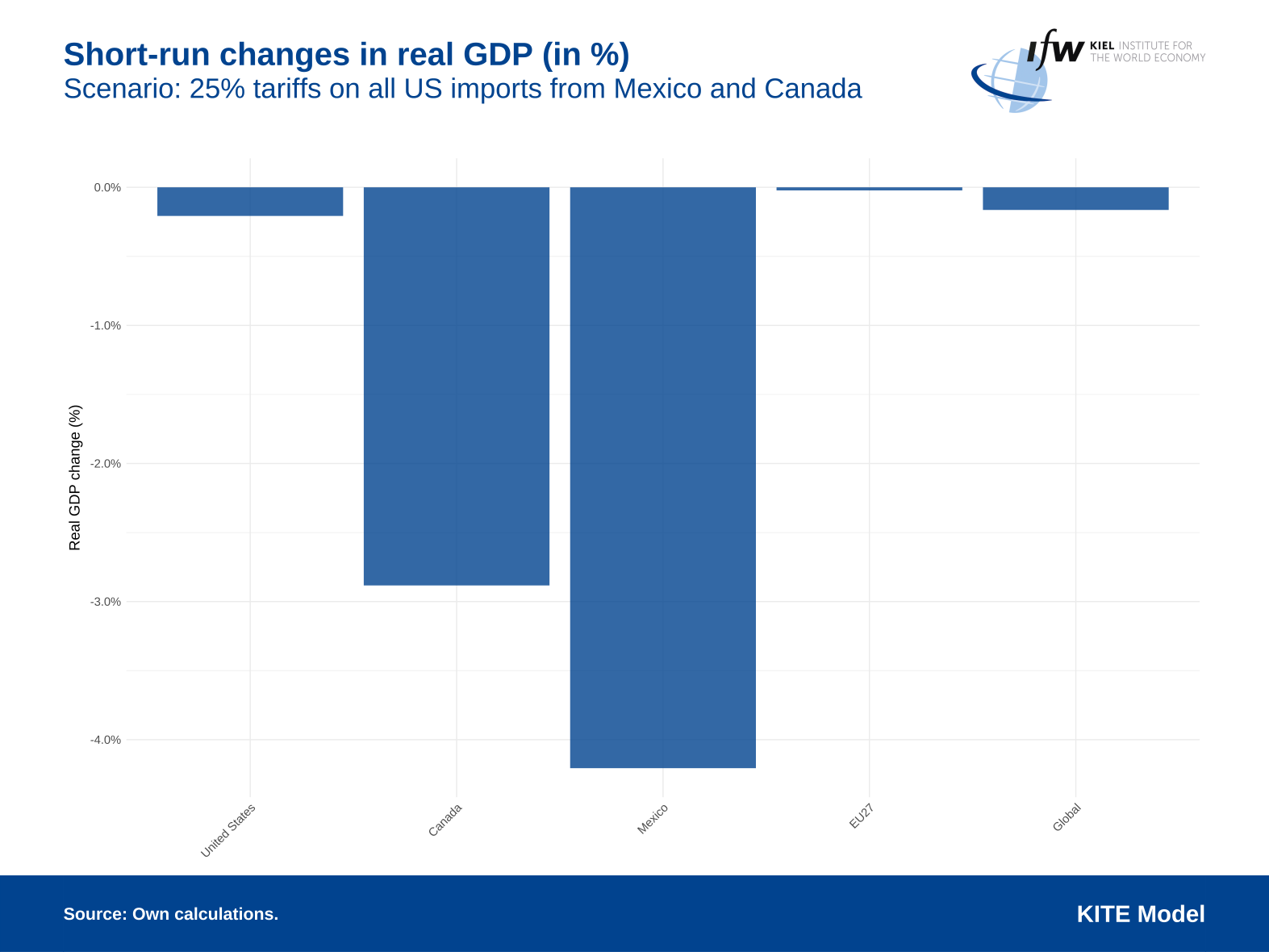
Globally, the repercussions would be limited. In the short run, trade diversion effects are moderate, which means that other regions, like the EU, would experience almost no impact. The EU, however, should still pay close attention to U.S. trade policy, as Trump has also hinted at future tariffs against European exports, particularly in the automotive and agricultural sectors.
In his memorandum on Monday, Trump outlined a potential willingness to negotiate new free trade agreements, however, which could provide an opportunity to address longstanding barriers to transatlantic trade. To mitigate risks and maintain stability, the EU could propose discussions about a new agreement aimed at strengthening transatlantic ties.
Other tariff threats include a 10 percent levy on imports from China, with even more extreme measures of 60 or 100 percent mentioned during the campaign. While it remains unclear which of these threats will be enacted, the scale of disruption could be significant. “The uncertainty surrounding which of these measures will be implemented creates challenges for businesses and policymakers alike, underscoring the need for proactive planning,” Hinz concludes.