
Divergent price dynamics and longer listings duration
Sales prices for residential real estate developed unevenly in the first quarter of 2026. Single-family homes recorded solid gains of 3.2 percent compared to the same quarter last year—but growth in apartment prices fell to its lowest level since the start of the positive trend in summer 2024. Adjusted for inflation, apartments prices even declined slightly. New liquidity indicators based on listing data also suggest that market momentum is continuing to slow.
These insights are based on the latest update of the GREIX sales price index, a joint project of the local expert committees for property values (Gutachterausschüsse für Grundstückswerte) and the Kiel Institute for the World Economy. The GREIX sales price index is based on notarized transaction data from sales price collections of the local expert committees and tracks price developments in 24 cities and regions. All data is available at greix.de.
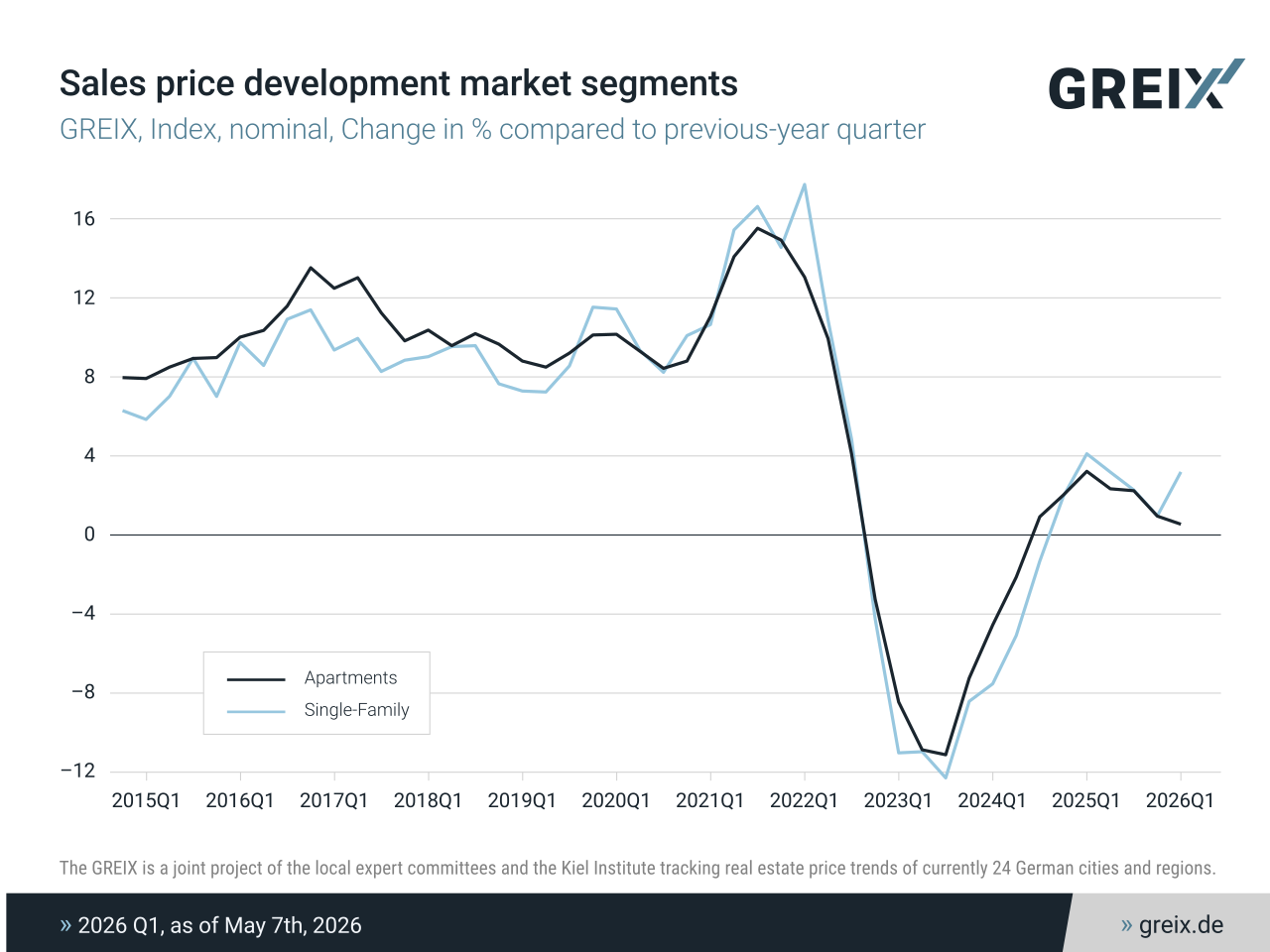
"The picture for the first quarter is a divided one: the momentum of price increases for apartments is losing steam noticeably, while single-family homes remain on a growth trajectory. Year-over-year price gains for apartments are the lowest since the start of the slight recovery in summer 2024. In real terms, that is - adjusted for purchasing power - apartments prices have even declined slightly. This slowdown reflects a trend we have been observing since around mid-2025," says Jonas Zdrzalek, GREIX Project Lead, Kiel Institute for the World Economy.
A market of different speeds
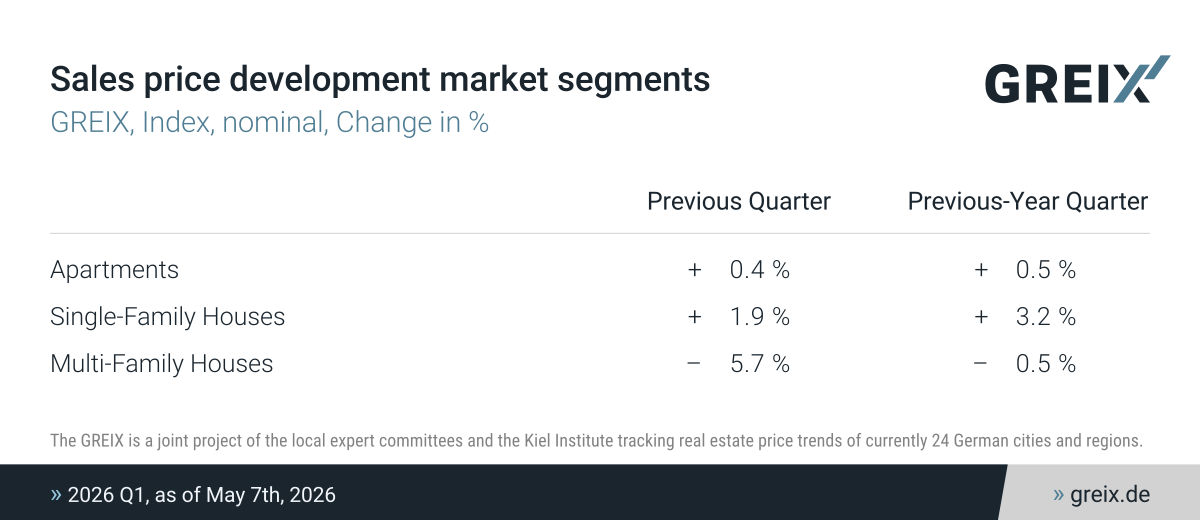
Compared to the previous quarter (Q1 2026 vs. Q4 2025), apartments prices in the GREIX rose by 0.4 percent. Single-family homes saw stronger gains of 1.9 percent. Multi-family homes, by contrast, were traded 5.7 percent cheaper. However, given the relatively low number of transactions in this segment, these figures are less conclusive.
In the year-over-year comparison (Q1 2026 vs. Q1 2025), apartments were up 0.5 percent and single-family homes up 3.2 percent in nominal terms. Multi-family homes were 0.5 percent below the prior-year level.
Adjusted for inflation, the picture for apartments is more negative: in real terms, prices were 0.2 percent below the previous quarter and 1.7 percent below the same quarter last year. Single-family homes, however, also gained in real terms — up 1.4 percent compared to the previous quarter and 0.9 percent compared to the same quarter last year.
Divergent trends in major cities
In Germany's major cities, apartments price developments varied considerably on a quarter-on-quarter basis. Leipzig recorded the strongest gain at 2.5 percent. Düsseldorf was slightly positive at 0.3 percent, while prices in Cologne remained unchanged (0.0 percent). Slight declines were recorded in Berlin (−0.3 percent), with more pronounced decreases in Frankfurt (−1.4 percent) and Stuttgart (−1.9 percent). Data for Hamburg and Munich for the first quarter of 2026 is not yet available.
New liquidity indicators: market losing momentum
For the first time, the GREIX Sales Price Index supplements transaction data with liquidity indicators derived from listing data for the 24 analyzed cities, based on the VALUE Marktdatenbank. These indicators show how quickly properties are taken offline from platforms, as measured by listing duration and the share of very short-lived listings.
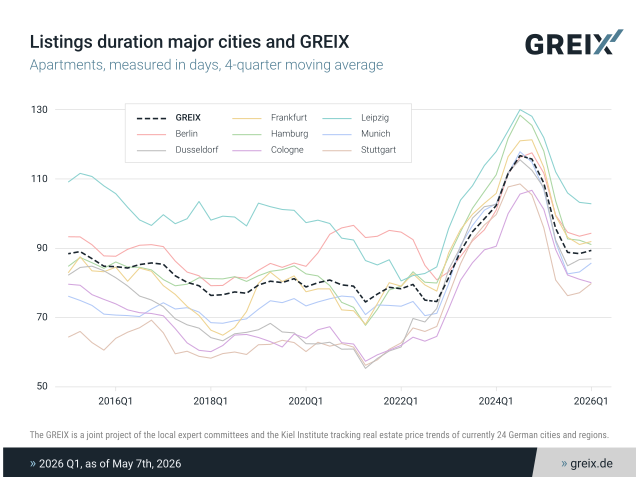
The indicators clearly reflect the market cycle: during the boom, the lowest point for apartments marketing duration was just 76 days in the GREIX in the second quarter of 2021. It then rose to 117 days in the changed market environment by the third quarter of 2024, before recovering noticeably — only to edge upward again now.
In the first quarter of 2026, the average listing duration stood at 90 days for apartments and 91 days for single-family homes — slightly higher than in the previous quarter in both segments.
"Price trends alone do not tell the whole story. When listings on platforms remain online for longer, the frequency and magnitude of price reductions in those advertisements increase, and the share of properties taken offline quickly declines — these are early signals that the market is shifting slightly. We are already observing this trend in parallel with the declining price dynamics since mid-2025," says Jonas Zdrzalek.
Read short report now:

Methodological note
The Greix sales price index is based on a hedonic regression method. This method mitigates the price distortions that often arise when using the average price per square meter. For example, if a large number of expensive apartments in a desirable location are sold in a given year, this can inflate the average price per square meter. However, these fluctuations may not reflect an overall increase in real estate values. Hedonic regression methods mitigate the impact of specific property characteristics on price trends.
About the GREIX
- What is the German Real Estate Index (GREIX)?
The German Real Estate Index (GREIX) is a publicly funded research project hosted at the Kiel Institute for the World Economy that aims to increase transparency in the German real estate market. To this end, GREIX regularly publishes updates on the development of sales prices (GREIX sales price index) as well as on the development of asking rents (GREIX rental price index). In addition to these price developments, GREIX publishes special analyses, for example on affordability or on price-determining factors such as location or energy efficiency. - What is the GREIX sales price index?
The GREIX sales price index is a real estate price index for Germany based on the sales price collections of the local expert committees, which contain notarized sales prices. It tracks the price development of individual cities and neighborhoods back to 1960 and is based on more than two million transaction data. The dataset can be used to analyze long-term trends in the real estate markets and to place current developments in a historical context. On greix.de, sales price indices for various market segments in currently 24 cities are freely available. The dataset will gradually be expanded to include additional cities. - What data and methods are used to create the indices?
Data collection is carried out by the local expert committees, which record all property transactions in full. Sales price analysis is conducted using state-of-the-art scientific methods and statistical techniques (hedonic regression method). The GREIX sales price index therefore represents the highest standard of scientific data quality.