
Regional differences: where home buyers must save over 20 years for upfront costs
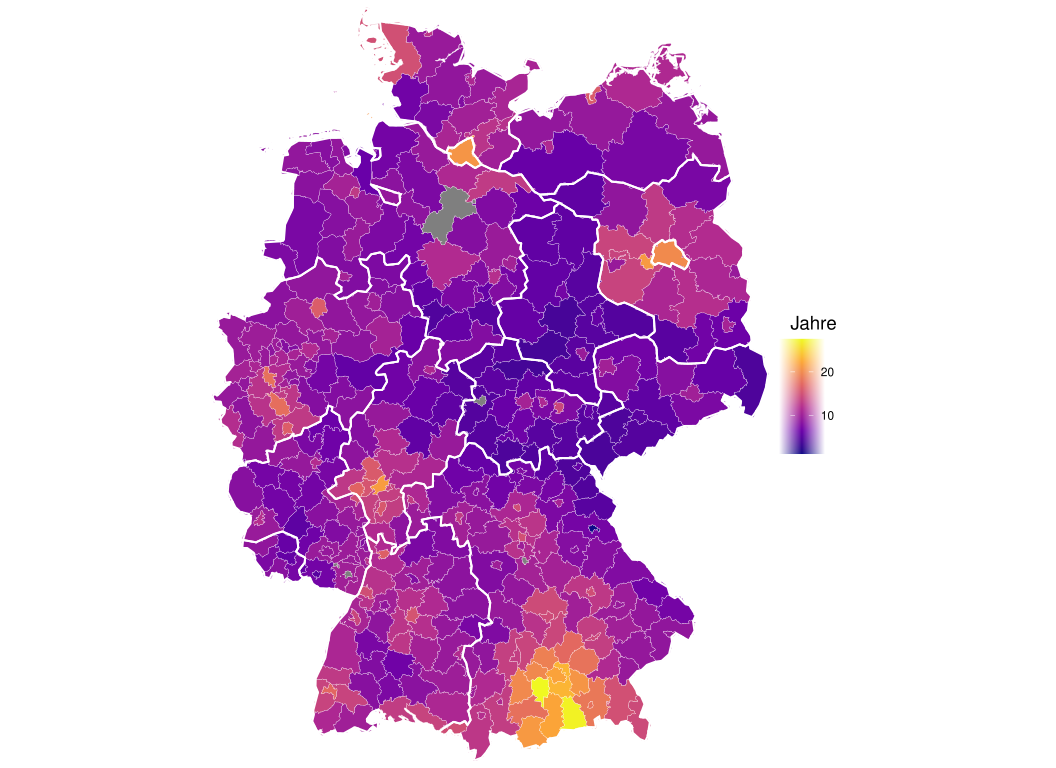
The time required to save for the total upfront cash requirement needed to purchase a residential property varies greatly across German districts. It ranges from 3.79 years in Kyffhäuserkreis, Thuringia, to 27.55 years in Starnberg, near Munich. A significant portion of this total consists of closing costs, which vary greatly depending on the state due to different real estate transfer taxes. These variations are shown in a new GREIX study by the Kiel Institute for the World Economy.
Differences in savings duration
The report, "Dreaming of a Home: The Regional Divide in Housing Affordability," reveals that the need for upfront cost is the primary barrier to purchasing residential real estate. These calculations are based on a gross savings rate of 20 percent of disposable income and an interest rate of 1.7 percent.
From 2015 to 2024, the median time to save for the required total upfront cash was 9.37 years, though significant regional differences were identified.
Impact of closing costs
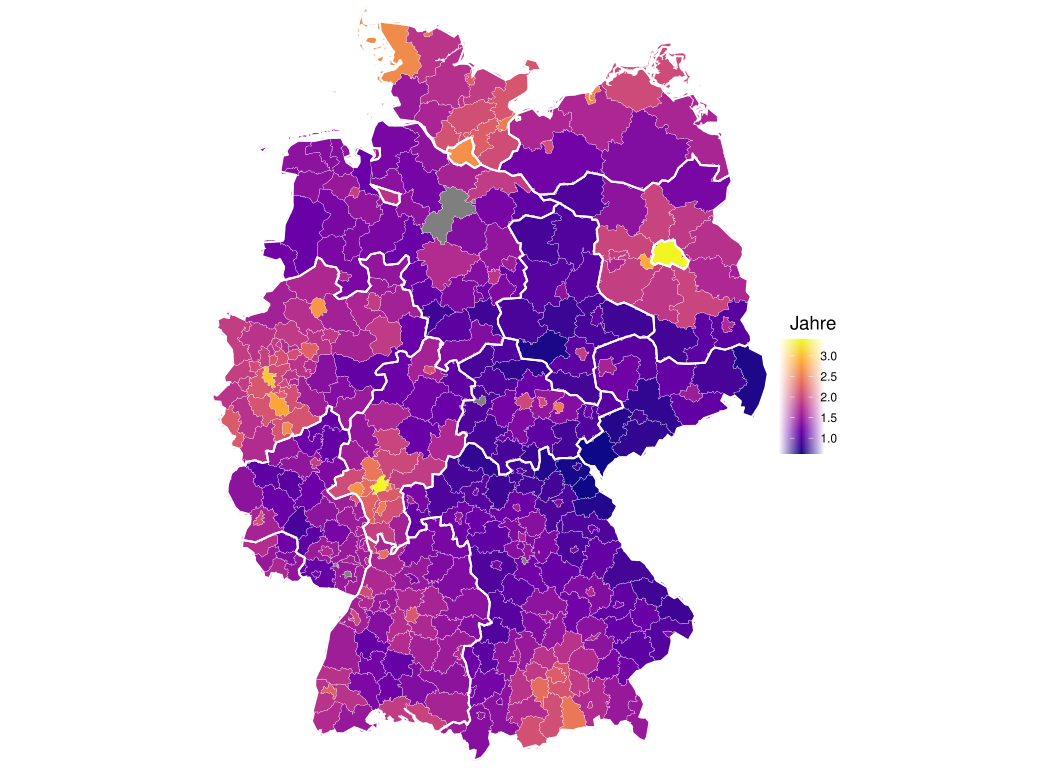
Closing costs, including real estate transfer tax, notary fees, and land registry fees, account for a significant portion of the entry barrier. On the median, these costs account for 1.46 years of the savings period. This corresponds to over 15 percent of the total upfront cost requirement.
"The regional map looks different when only considering transaction costs. While high-priced regions around the Bavarian state capital of Munich top the overall ranking, expensive cities in federal states with high real estate transfer taxes, such as Berlin, Düsseldorf, and Frankfurt, lead the way in terms of closing costs. This shows another regional inequality in transaction costs," says Jonas Zdrzalek, the GREIX project lead at the Kiel Institute for the World Economy.
Because the real estate transfer tax is set by individual states, disparities in financial burden arise that are not solely attributable to market prices. Zdrzalek adds, "Our study vividly shows how much the varying real estate transfer tax changes the regional picture. Part of the hurdle comes not only from prices, but also from politically set closing costs. This is particularly relevant for households without existing assets because these costs must be paid immediately."
Policy recommendations
The authors of the study point out that policymakers could facilitate access to homeownership by adjusting one-off closing costs. One direct lever is targeted relief on real estate transfer tax for owner-occupying first-time buyers. Another recommended strategy is shifting the tax burden toward ongoing property taxes.
Read Kiel Policy Brief now:
Methodology of the study
Francisco Amaral, Gereon Staratschek, Jonas Zdrzalek, and Steffen Zetzmann conducted an analysis examining the affordability of homeownership across Germany from 2015 to 2024. The study uses regional price data from VALUE AG and treats single-family houses and apartments as weighted averages. To accurately reflect local conditions, the researchers used specific regional household incomes for each district. The calculations incorporated detailed regional financing data from the Interhyp Group and vdp regarding mortgage rates, loan-to-value ratios, and repayment rates. This combined approach illustrates the strong dependence of access to homeownership on regional conditions.

About the Greix:
The German Real Estate Index (GREIX) is financed by public funds and aims to increase transparency in the housing market.
GREIX publishes regular updates on transaction price developments based on the purchase price collections of the regional expert appraisal committees (GREIX sales price index), and on rent developments based on the ‘Value Marktdatenbank’ (GREIX rental price index). Price developments are calculated using state-of-the-art scientific standards and statistical methods (hedonic regression). GREIX therefore stands for the highest scientific data quality.
In addition to price developments, GREIX regularly publishes special analyses, e.g. on affordability or on price determinants such as location or the energy-efficiency status. For the GREIX overview, click here.