
GREIX: Equity requirements are hindering the path to homeownership
Housing affordability in Germany has declined markedly over the past 40 years. However, the main obstacle is not the monthly burden of interest and principal repayments, but rather the sharply increased upfront costs requirement. According to a GREIX analysis by the Kiel Institute, the required equity share in German cities has roughly doubled since 1980. A generational comparison between young and old households today suggests that millennials who have wanted to finance a home in the past ten years have needed, on average, almost 14 years to save enough, twice as long as the baby boomer generation.
The researchers examined real estate prices, mortgage conditions, household incomes, and transaction costs from 1980 to 2024 in their analysis.
- Read the full report now:
Dreaming of a home: Equity as an obstacle to home ownership - Read the Working Paper now:
Beyond Interest Rates: Upfront Costs and Housing Affordability in Germany
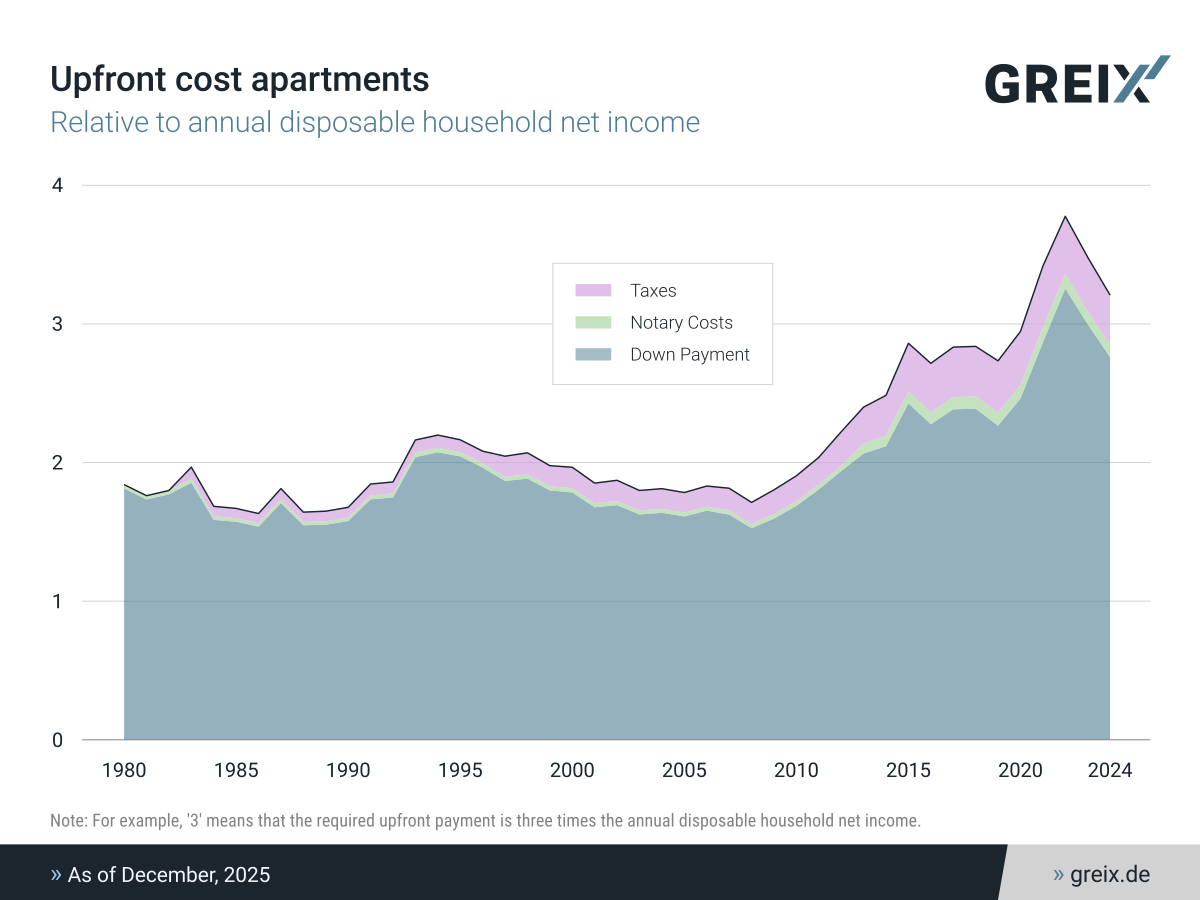
The data show that buying a property has become much harder today because the required equity share has increased substantially. In the 1980s, buying an apartment required equity equal to about 1.7 times annual household income on average. Today, more than three years’ worth of income is needed.
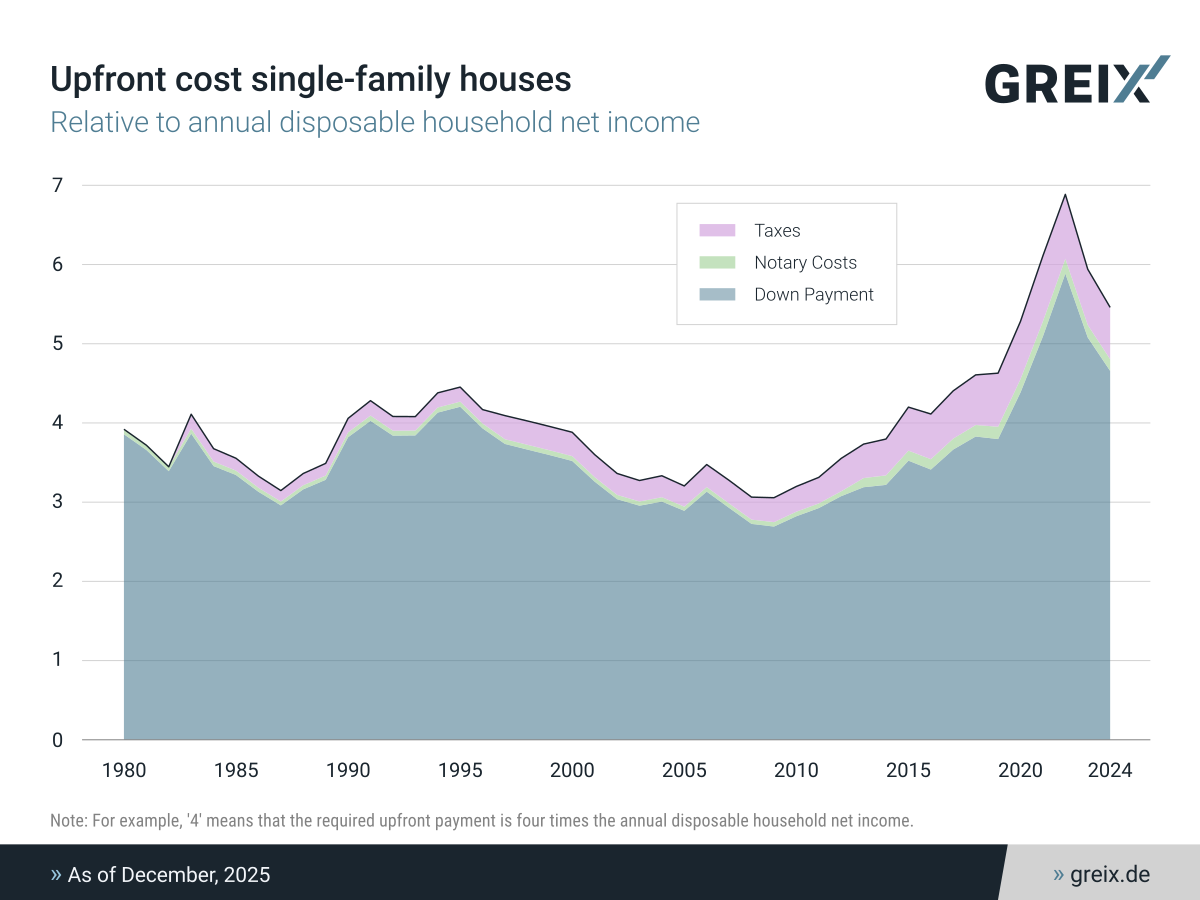
For single-family houses, upfront costs during the peak of the real estate boom even rose to seven times annual household income. Currently, the figure stands at more than five times. In the 1980s, equity of 3.6 times annual household income was sufficient to obtain a mortgage.
The main drivers are the price boom over the past decade as well as significant increases in the real estate transfer tax.
Mortgage burden stable — equity requirements explode
“With a realistic savings rate of 20 percent of disposable income, households today need around 14 years to accumulate the required equity, twice as long as in the 1980s,” says co-author Jonas Zdrzalek, project leader of GREIX at the Kiel Institute.
By contrast, ongoing mortgage burdens are not significantly higher today than they were in the 1980s, because falling interest rates have offset much of the price increase. When purchasing apartments, households from the baby boomer generation spent around 20 percent of their income on mortgage payments; millennials today spend about 25 percent, broadly similar levels.
Family transfers gain importance
The authors conclude that the higher equity requirement causes more people to rely on family transfers, such as gifts and inheritances, in order to buy a home. The share of inherited properties is also increasing. "A household's ability to become a homeowner increasingly depends on whether financial support from family is available," says Jonas Zdrzalek.
The authors regard this as not only a housing market issue, but also a challenge to social mobility and intergenerational fairness.
Lower barriers to property ownership
They therefore call for a fundamental reform of housing support policies. Measures that merely reduce monthly mortgage burdens, such as interest-related subsidy programs, fall short, as they primarily benefit those who can already raise the required equity. What matters most is lowering entry barriers. These could be reduced substantially by a significant cut in the real estate transfer tax, combined with a moderate increase in the recurrent property tax, without placing a lasting burden on public finances. This would make purchasing property easier, particularly for young and low-wealth households.
Explore all GREIX analyses now
Read studies now:

About the Greix:
The German Real Estate Index (GREIX) is financed by public funds and aims to increase transparency in the housing market.
GREIX publishes regular updates on transaction price developments based on the purchase price collections of the regional expert appraisal committees (GREIX sales price index), and on rent developments based on the ‘Value Marktdatenbank’ (GREIX rental price index). Price developments are calculated using state-of-the-art scientific standards and statistical methods (hedonic regression). GREIX therefore stands for the highest scientific data quality.
In addition to price developments, GREIX regularly publishes special analyses, e.g. on affordability or on price determinants such as location or the energy-efficiency status. For the GREIX overview, click here.