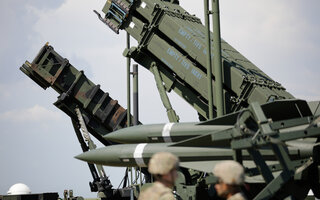

EU should lead a strategic coalition to counter US trade threats
The United States has once again threatened sweeping new tariffs on imports from the European Union, Canada, Mexico, Brazil, and South Korea. A new Kiel Policy Brief by Julian Hinz, Moritz Schularick, Keith Head, Isabelle Mejean, and Emanuel Ornelas argues that a united, proportional response is the best strategy to prevent the breakdown of the rules-based trading system.
Read Kiel Policy Brief now: An Alliance for Open Trade: How to Counter Trump’s Tariffs
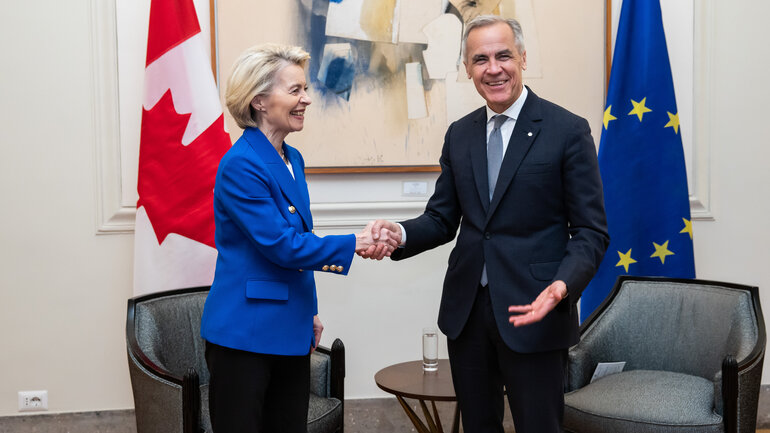
© European Union
Bilateral deals undermine the WTO
The US is increasingly making bilateral deals that bypass the WTO. A recent agreement with Japan includes higher tariffs on US imports in exchange for better US access to Japanese markets—similar to earlier deals with the Philippines, Vietnam, and Indonesia. These deals violate core WTO principles and create a dangerous precedent.
This trend threatens global prosperity and could, in the medium term, trigger a dangerous escalation of trade conflicts. The EU, the authors argue, should resist such bilateral arrangements and instead champion the rules-based multilateral system.
A coalition with leverage
The Kiel Policy Brief proposes a united trade coalition of the EU, Canada, Mexico, Brazil, and South Korea—economies that collectively absorb over 50 percent of US goods exports. Acting together, they can impose proportional, WTO-compliant counter tariffs that Washington cannot ignore. “This moment calls for a strategic coalition,” Julian Hinz says, “led by the EU and including Canada, Mexico, Brazil, and South Korea.”
Simulations using the KITE Model demonstrate that such a unified response would increase the economic cost to the US by 34 percent compared to a scenario without retaliation, achieving nearly 60 percent of the impact that a full global response would generate. In contrast, unilateral retaliatory measures by individual countries are less effective and may come at significant domestic cost—particularly for highly integrated economies like Canada and Mexico.
Protecting principles, not escalating onflict
A collective response must be framed as a legitimate, temporary remedy rooted in WTO rules, the authors argue. “Our proposed measures follow the WTO guidelines for proportional retaliation, are temporary, and will be lifted the moment the United States rescinds its tariffs and returns to the path of cooperation,” says Moritz Schularick, president of the Kiel Institute.
To maximize political impact, countermeasures should target key US export sectors—automotive, aerospace, pharmaceuticals, and agriculture—where the coalition holds strong leverage. These industries are not only economically significant but also politically influential, making them ideal pressure points for fostering domestic opposition to protectionism.
The message to Washington must be clear: the coalition is willing to defend open markets and a predictable global trade environment. This unified stand would also send a powerful signal to smaller countries that they need not capitulate to US pressure, reinforcing faith in international law and encouraging broader participation in the coalition.