

Research Director | Fielmann Professor
Prof. Dr. Sebastian Braun
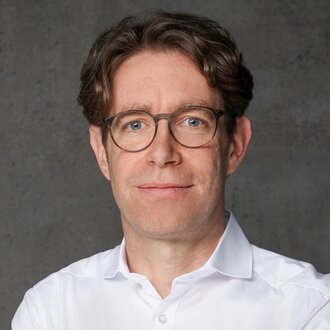
Research Director | Fielmann Professor
Prof. Dr. Sebastian Braun
Sebastian Till Braun holds the Fielmann Professorship for the Economics of Global Transformation at the Kiel Institute and Kiel University. He is also a Research Fellow at IZA@LISER and RFBerlin and serves on the editorial board of The Journal of Economic History. Before joining the Kiel Institute, he was a Full Professor at the University of Bayreuth and an Associate Professor at the University of St Andrews. His research adopts a long-term perspective to study multiple pressing global transformations, including growing regional disparities, increasing interstate violence, and rising levels of forced migration. He studies how war and displacement affect labor markets, as well as how regions adapt to adverse labor market shocks and recover from economic decline. His work is explicitly interdisciplinary, drawing on historical perspectives to understand the dynamics of global transformations over time.
Topics
MigrationWarInnovation and Structural ChangeLabor MarketMain research interests
- Labor Markets
- Labor Economics
- Regional Economics
- Economic History
- Structural Change
- Transformations
- War
- War Victims
- Displaced Persons
Sebastian Till Braun holds the Fielmann Professorship for the Economics of Global Transformation at the Kiel Institute and Kiel University. He is also a Research Fellow at IZA@LISER and RFBerlin and serves on the editorial board of The Journal of Economic History. Before joining the Kiel Institute, he was a Full Professor at the University of Bayreuth and an Associate Professor at the University of St Andrews. His research adopts a long-term perspective to study multiple pressing global transformations, including growing regional disparities, increasing interstate violence, and rising levels of forced migration. He studies how war and displacement affect labor markets, as well as how regions adapt to adverse labor market shocks and recover from economic decline. His work is explicitly interdisciplinary, drawing on historical perspectives to understand the dynamics of global transformations over time.