Ukraine support after 4 years of war: Europe steps up
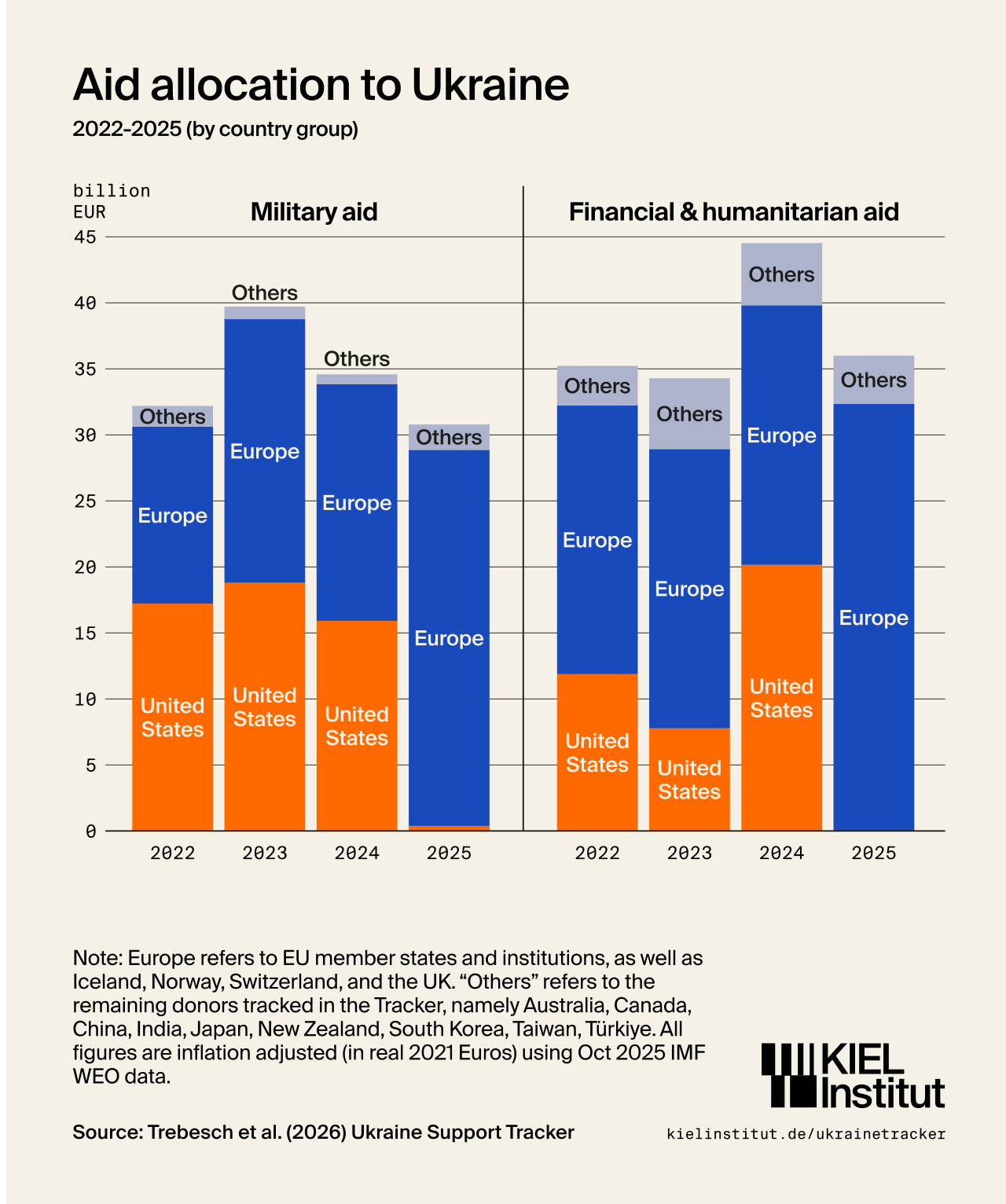
Despite the halt of US support, the total volume of aid allocated to Ukraine remained relatively stable in 2025, primarily due to the markedly expanded support from Europe. European military aid rose by 67 percent above the 2022–2024 average, while non-military aid increased by 59 percent. Military aid is increasingly borne by only a small number of countries, while financial aid now mainly comes from EU institutions. These are among the key findings in the latest data update and Kiel Policy Brief of the Ukraine Support Tracker, covering data through December 2025.
For more in-depth analysis on these trends and further insights into the evolution of Ukraine support over the past four years see our new Kiel Policy Brief “Ukraine Support: After Four Years of War”
In 2025, European aid increased notably, with military aid allocation rising by 67 percent and financial and humanitarian aid by 59 percent compared to the annual average between 2022 and 2024. Because of the full withdrawal of the US, however, total military aid allocations to Ukraine in 2025 was 13 percent below the annual average between 2022 and 2024. The decline in humanitarian and financial aid allocation was smaller, at around -5 percent compared to the past three years, with overall volumes remaining above the levels recorded in 2022 and 2023 (all figures inflation-adjusted).
The EU Commission has become the dominant financial donor
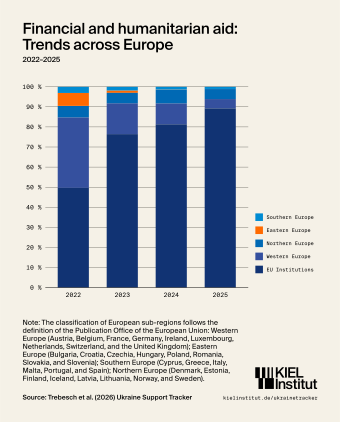
Behind the overall increase in European engagement lie several structural shifts. The bulk of additional financial and humanitarian aid is now provided through EU institutions and their mechanisms. The share of EU-level financial and humanitarian aid allocations grew from around 50 percent in 2022 to almost 90 percent in 2025 (EUR 35.1 billion).
“The new 90 billion EUR loan agreed on in late 2025 is part of a general trend. Ukraine’s growing budgetary needs are now largely financed through EU-level loans and grants” says Christoph Trebesch, Head of the Ukraine Support Tracker. “This growing reliance on multilateral, EU-level aid means that Ukraine support is more fairly distributed across the EU, namely in line with each country’s GDP share in the bloc. However, this pattern is only observable for financial aid, while military aid still requires bilateral donations of individual member states, and we see far less burden sharing there.”
European military aid concentrates on a small number of countries
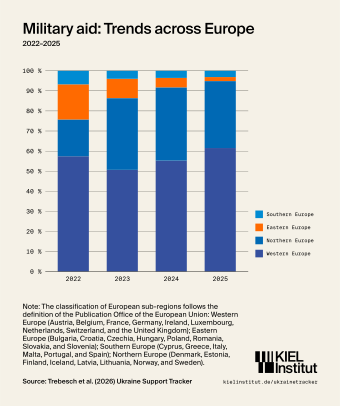
The increase in European military aid is increasingly concentrated on a small number of countries, especially in Western and Northern Europe. Western European aid rebounded after a downturn in 2023 and reached 62 percent of total European military aid allocations in 2025. This recovery was driven primarily by the region’s largest economies: Germany and the United Kingdom alone accounted for around two thirds of Western Europe’s military aid between 2022 and 2025. Northern Europe is the second key donor region, with its share rising from 18 percent in 2022 to 36 percent in 2023 and remaining at a high level thereafter.
By contrast, Eastern and Southern Europe steadily reduced their contributions between 2022 and 2025: in Eastern Europe, the share fell from 17 percent in 2022 to just 2 percent in 2025; in Southern Europe it declined over the same period from 7 to 3 percent.
“The increase in European military aid in 2025 shows growing disparities, with a few countries doing ever more,” Trebesch adds. “In 2025, Northern Europe provided around one third of Europe’s military aid despite accounting for only 8 percent of GDP among the 31 European donors covered in the Tracker, Western Europe contributed roughly in line with its economic size, while Southern Europe remains a small donor despite representing 19 percent of GDP.”
Read Kiel Policy Brief now:
About the Ukraine Support Tracker
The Ukraine Support Tracker tracks and quantifies military, financial, and humanitarian assistance pledged to Ukraine since January 24, 2022. Included are 41 countries, specifically the EU member states, the other members of the G7, Australia, South Korea, Turkey, Norway, New Zealand, Switzerland, Turkey, China, Taiwan, India, and Iceland. It includes pledges made by the governments of these countries to the Ukrainian government; aid pledged by the EU Commission and the European Investment Bank is listed separately; private donations or those from international organizations such as the IMF are not included in the main database. Nor does it include aid to Ukraine's neighbors, such as Moldova, or to other countries, such as for the reception of refugees.
Data sources include official government announcements and international media reports. Aid in kind, such as medical supplies, food, or military equipment, is estimated using market prices or information from previous relief operations. In cases of doubt, the higher available value is used. The Ukraine Support Tracker is constantly being expanded, corrected and improved. Feedback and comments on our methodology paper and dataset are very welcome. You can reach us at ukrainetracker@ifw-kiel.de.
More information and all detailed data can be found on the Ukraine Support Tracker webpage.