
New U.S. Tariffs Hit the U.S. Itself Hardest
The newly announced tariffs by the US administration on imports from nearly all countries could have severe negative economic consequences—most notably for the United States itself. Other countries are significantly less affected, with Germany and the EU only moderately impacted by comparison.
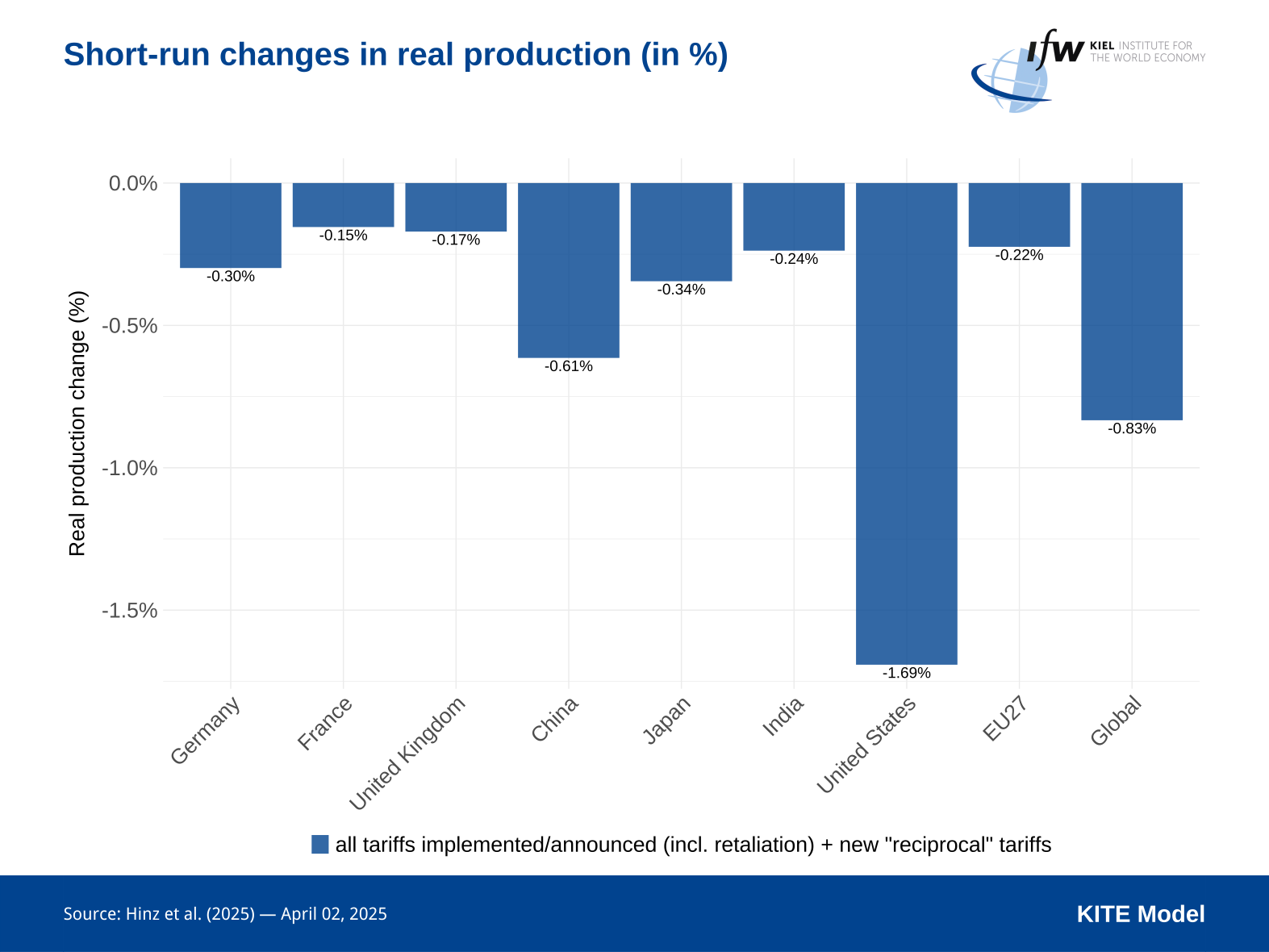
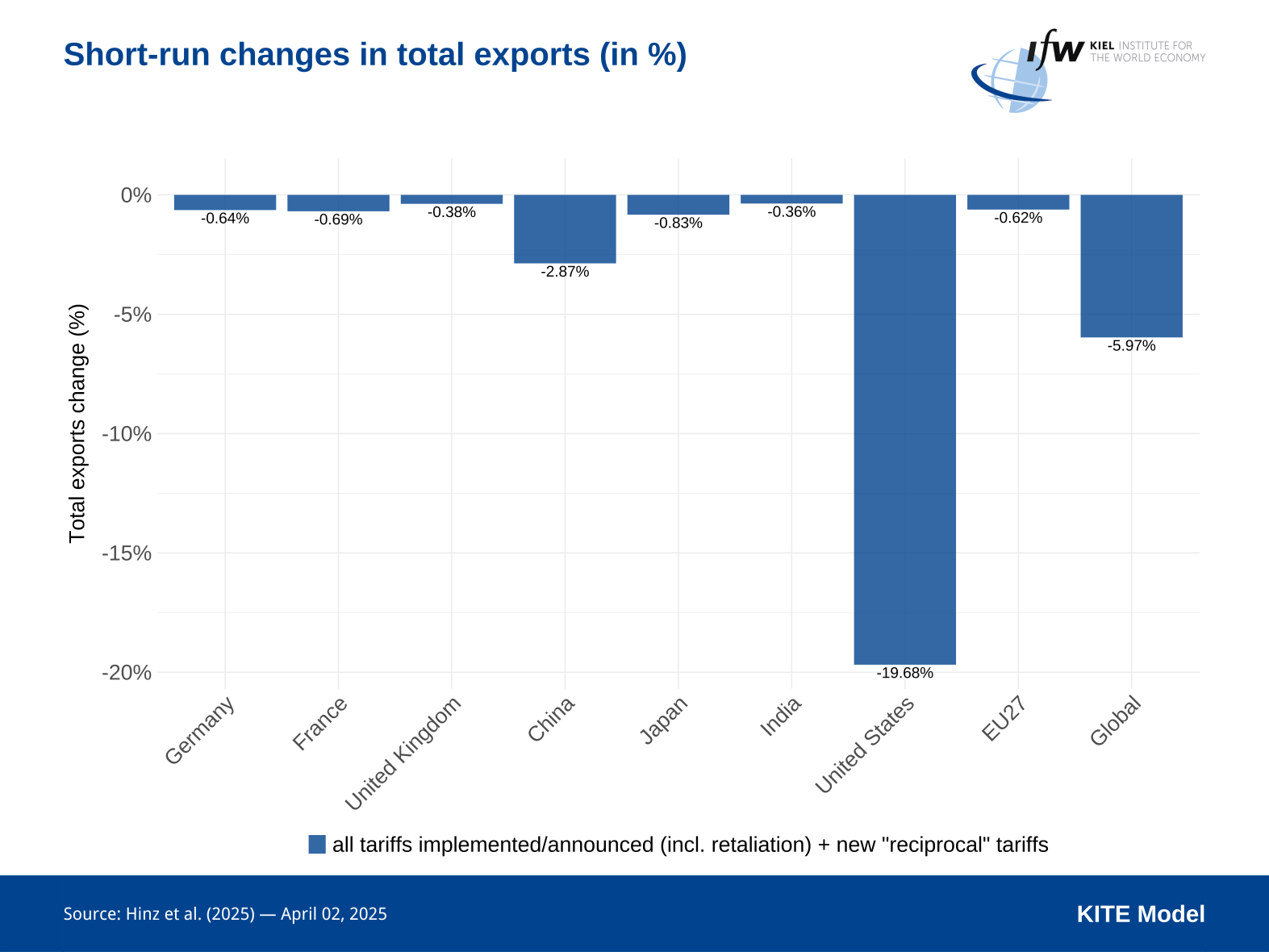
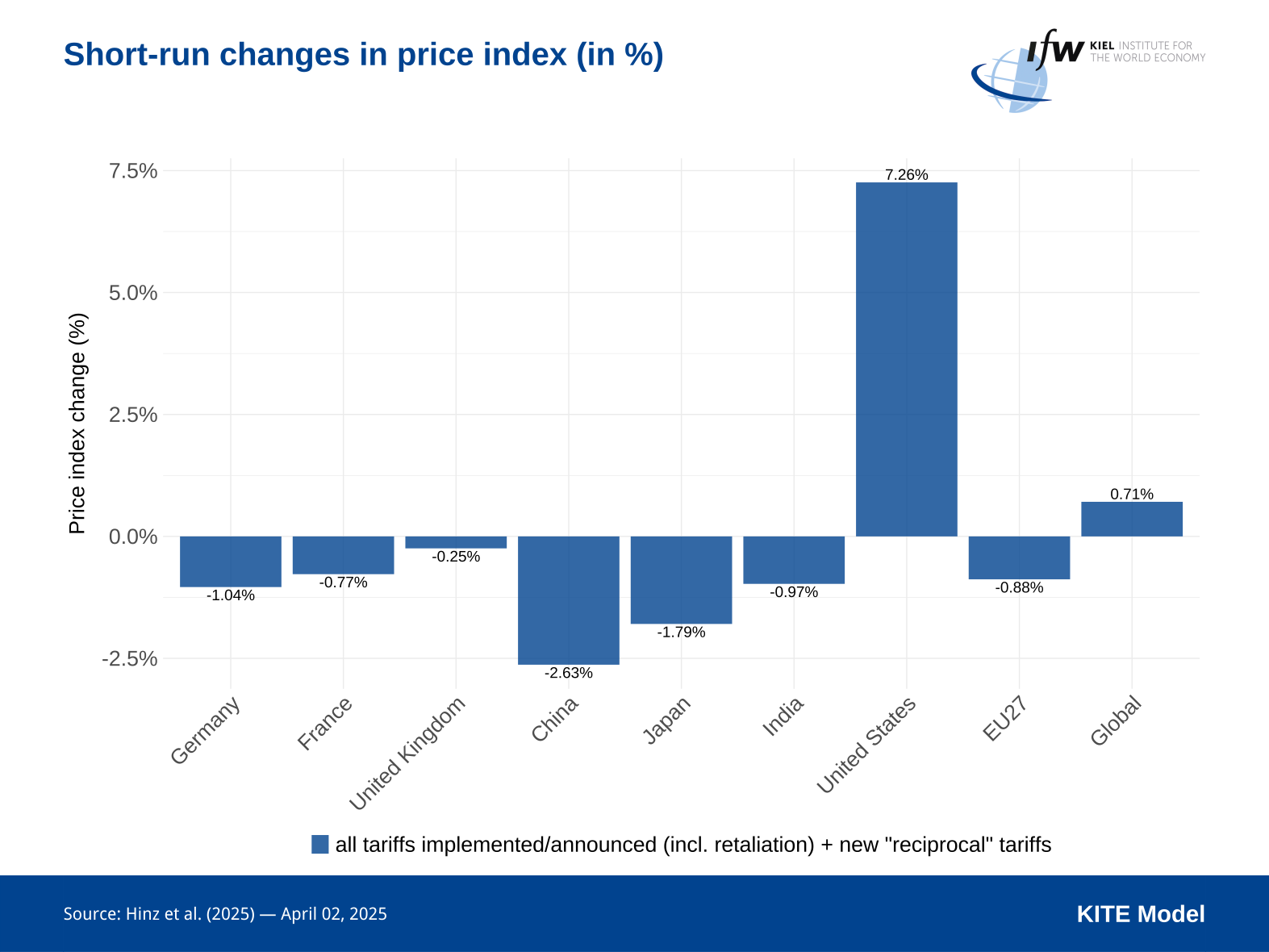
Simulations using the Kiel Institute’s KITE model show that Donald Trump’s trade policy primarily harms the US economy. The proposed tariffs could reduce US economic output by nearly 1.7 percent within a year, push up prices by more than 7 percent, and lead to an export decline of almost 20 percent.
If affected countries retaliate, price effects in the US would likely be somewhat smaller, but the decline in exports would be even larger. This means the economic consequences would be far more dramatic for the US than for nearly any other country.
The EU can expect a decline in output of just over 0.2 percent and Germany by just over 0.3 percent. Global economic output would likely fall by around 0.8 percent. German and EU exports are projected to decline by around 0.6 percent. Global trade volumes could shrink by nearly 6 percent.
Prices in Germany and the EU are expected to decline by 1 percent and 0.9 percent, respectively. One reason is that exports originally destined for the US are being redirected to the European market, increasing competition there. Globally, prices are projected to rise by 0.7 percent.
“The tariffs will be a stress test for some German and European sectors and companies for whom the U.S. is an important market. But the newly announced tariffs affect all countries, to varying degrees, and the EU has come through relatively well,” says Julian Hinz, Research Director for Trade Policy at the Kiel Institute. “Prices are rising significantly in the US, but German and European firms are not worse off than other exporters to the US on average.”
The dramatic price development in the US is due to the fact that tariffs raise not only the prices of imported final goods, but also of intermediate inputs, making domestic production more expensive. At the same time, reduced competition allows domestic producers to raise prices as well. This amplifies inflationary pressure and reduces the purchasing power of US households.
European economies are significantly less affected than the global average. This is partly due to their lower dependence on the US market and partly because the EU is not specifically targeted compared to other regions.
Hinz adds: “We are witnessing the US turning away from free trade. But there are around 200 other countries still trading under the existing rules.”
The Kiel Institute for the World Economy will continue to monitor developments with up-to-date data and analysis via the Kiel Trade and Tariffs Monitor.