
Skip to main navigation Skip to main content Skip to page footer
Research Group

Global Commons and Climate Policy

The Climate Policy and Global Commons research group is dedicated to exploring policies and approaches consistent with the ambitious temperature targets set out in the UNFCCC Paris Agreement, and to exploring the interconnected, open-access systems and resources that transcend national boundaries and governance. The research group uses integrated assessment models, computable general equilibrium models, panel estimation, and surveys to study climate impacts and policies, in particular carbon pricing, emissions trading, and other market-based mechanisms to incentivize low-carbon technologies and behaviors.

We study the economic feasibility, impacts, and acceptability of carbon and solar geoengineering interventions, considering their potential risks, benefits, and prospects for globally non-coordinated climate policies. In addition, the research group applies bio-economic models and the inclusive wealth approach to derive solutions for natural resource management and valuation.

We assess progress towards the Sustainable Development Goals (SDGs), with a particular focus on the SDGs related to climate, oceans, and biodiversity. These issues are also addressed from a geopolitical perspective, as in open access regimes across national jurisdictional boundaries, understanding geopolitical goals is essential for dynamic resource management. 
Director

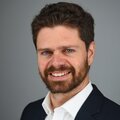
  • Prof. Dr. Wilfried Rickels
    Research Director

Deputy head

  • Dr. Christine Merk
    Kiel Institute Researcher
  • Project

    Does the nationality of CO2 matter? Public perceptions of a Northern European market for CO2 storage (CCSMARKET)

    In the project CCSMarket we explore public perceptions of building up a European infrastructure for CO2-transport and -storage and the trade of CO2…

  • Project

    Co-CREATE

    Conditions for Responsible Research on SRM - Analysis, Co-creation, and Ethos (Co-CREATE)

  • Project

    SeaO2-CDR

    Strategies for the Evaluation and Assessment of Ocean based Carbon Dioxide Removal

  • 17.12.2025

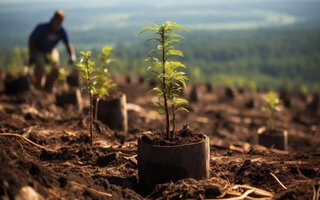
    A tree plantation. Furrows with evenly spaced seedlings in black pots. Blurred worker and a valley in the background

    Temporary CO₂ removals can offset methane

    Nature-based CO₂ removals with temporary effects, such as afforestation, are a key building block for effective climate protection because they can…

  • News

    10.02.2025

    Global Economic Challenges: Why a New German Government Must Think and Act European

    Pursuing a European approach to international trade policy—the agenda of the Kiel Institute calls for a robust EU response to geopolitical tensions,…

  • News

    06.06.2023

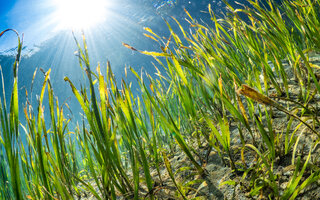
    Seagras

    New EU project launched to evaluate mechanisms for using the ocean to remove atmospheric CO2

    A new four-year Horizon Europe project has been initiated to investigate the feasibility of storing CO2 in the ocean. It aims to determine whether…

  • 11 – 12 May

    2023

    Call for Papers – Kiel Institute Workshop on:

    The role of public research and innovation measures on mitigating climate change

  • 11 Feb

    2020

    Research Seminar

    Booming gas - A theory of endogenous technological change in resource extraction — Felix D. Meier

Team

  • Robin Fleet
    Kiel Institute Researcher
  • Dr. Christine Merk
    Kiel Institute Researcher
  • Prof. Dr. Sonja Peterson
    Kiel Institute Researcher
  • Prof. Dr. Wilfried Rickels
    Research Director
  • Christian Rischer
    Kiel Institute Researcher
  • Lotta Siebert
    Kiel Institute Researcher
  • Dr. Andrea Kristina Wunsch
    Kiel Institute Researcher

Fellows

  • Dr. Tobias Heimann
    Kiel Institute Fellow
  • Prof. Dr. Dr. Christian Henning
    Kiel Institute Fellow
  • Dr. Felix Meier
    Kiel Institute Fellow
  • Prof. Dr. Martin Quaas
    Kiel Institute Fellow
  • Dr. Amelie Griesoph
    Kiel Institute Junior Fellow
  • Torben Helfrich
    Kiel Institute Junior Fellow
  • Lennard Kröger
    Kiel Institute Junior Fellow
  • Leonie Meissner
    Kiel Institute Junior Fellow
  • Lara-Sophie Wähling
    Kiel Institute Junior Fellow

Our Partners