

22 Jun
2026
Award Ceremony
Global Economy Prize 2026
The Kiel Institute, together with its partners—the City of Kiel and the Schleswig-Holstein Chamber of Industry and Commerce (IHK)—presented the Global Economy Prize for the 21st time in Kiel.
Against the backdrop of the tenth anniversary of the Brexit referendum, this year’s award recognizes individuals who have made exceptional contributions to addressing the challenges of economic and political integration, the dangers of populism, and the future of open societies:
- Martin Wolf, Chief Economics Commentator at the Financial Times
- Sabine Weyand, Director-General for Trade and Economic Security at the European Commission (until May 2026), Special Adviser for European Strategic Partnerships, European Commission (since June 2026)
Program
Award winners
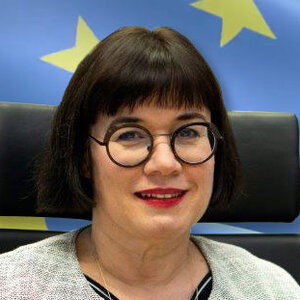
Sabine Weyand
Director-General for Trade and Economic Security at the European Commission (until May 2026), Special Adviser for European Strategic Partnerships, European Commission (since June 2026)
The jury's reasoning:
“Sabine Weyand possesses the rare ability to work effectively behind the scenes while at the same time playing a decisive role in shaping political decisions across a wide range of policy areas. She combines outstanding expertise with strong political instinct, and meticulous attention to detail with strategic foresight.
With great analytical precision, a steady hand, and remarkable perseverance, she successfully guided complex processes during the Brexit negotiations between the European Union and the United Kingdom, while always keeping the broader picture in mind. It was particularly in these negotiations that she demonstrated an exceptional ability to bridge divides without ever losing sight of her principles.”
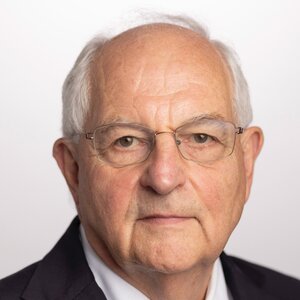
Martin Wolf
Chief Economics Commentator at the Financial Times
The jury's reasoning:
“Martin Wolf is one of the most influential, incisive, and astute economic commentators of our time. With impressive clarity, analytical acuity, and intellectual integrity, he succeeds in making complex economic relationships understandable without oversimplifying them.
His commentaries are distinguished by a rare combination of deep economic knowledge, historical perspective, and moral seriousness, and are required Kiel Institute for the World Economy — Leibniz Center for Research on Global Economic Challenges Page 1/2 reading for policymakers, academics, students, and anyone who wants to understand how our world works economically.”