
Trump’s Steel and Aluminum Tariffs: US Harms Primarily Itself, Virtually No Direct Impact for EU
The Trump administration will impose 25 percent tariffs on all steel and aluminum imports into the United States tomorrow (March 12). These new protectionist measures are the first of their kind under Trump’s current term to directly affect the European Union. According to simulations by the Kiel Institute for the World Economy using the KITE model, the tariffs will primarily harm the US itself, while having virtually no negative economic consequences for the EU. However, Canada and Mexico face substantial repercussions.
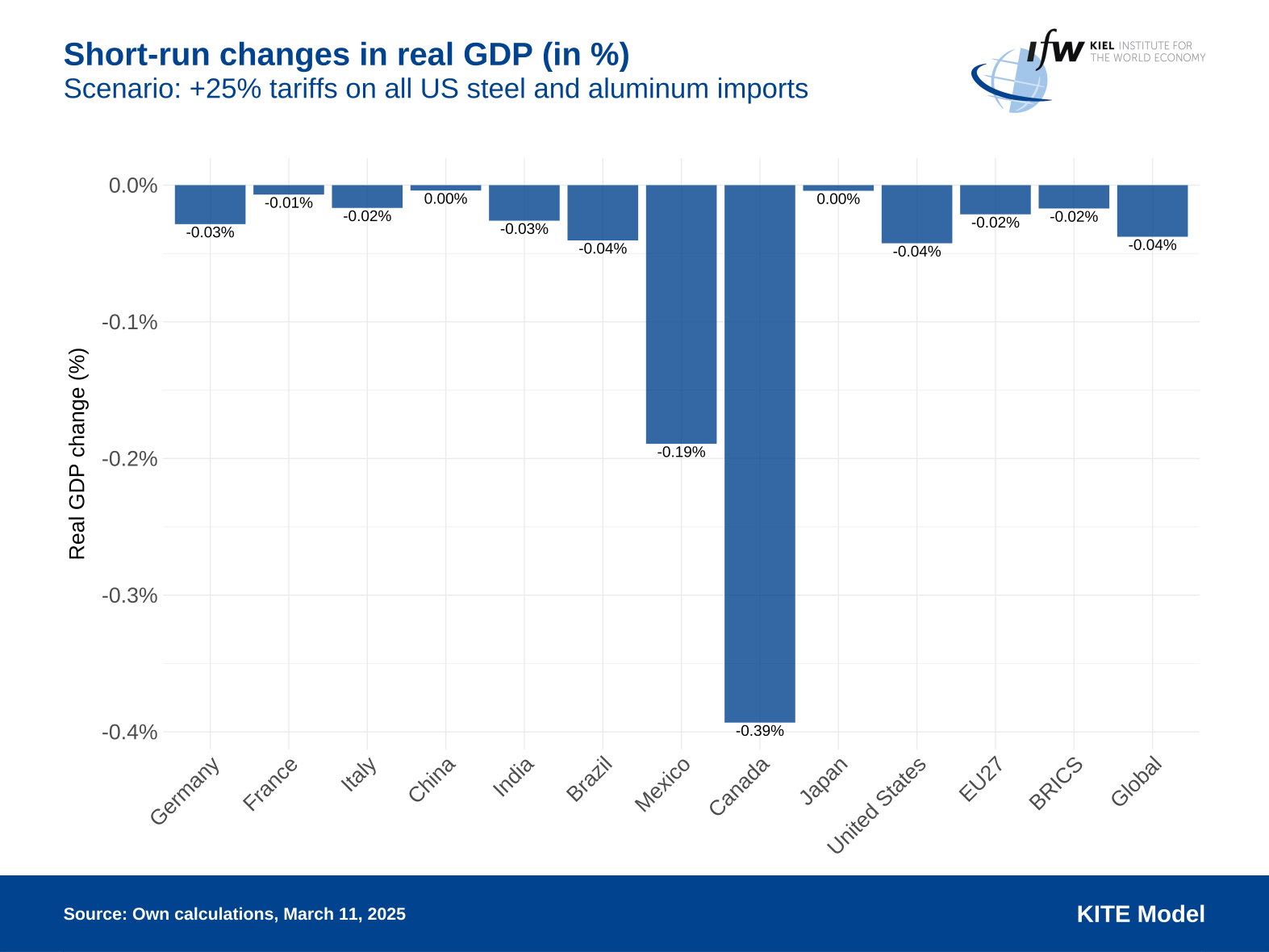
According to simulations, the short-run economic impact of US steel and aluminum tariffs on the EU economy amounts to a decline in real GDP of only 0.02 percent. This minimal effect occurs because the affected products constitute just around 5 percent of total EU exports, and of those, only a small fraction is exported to the United States.
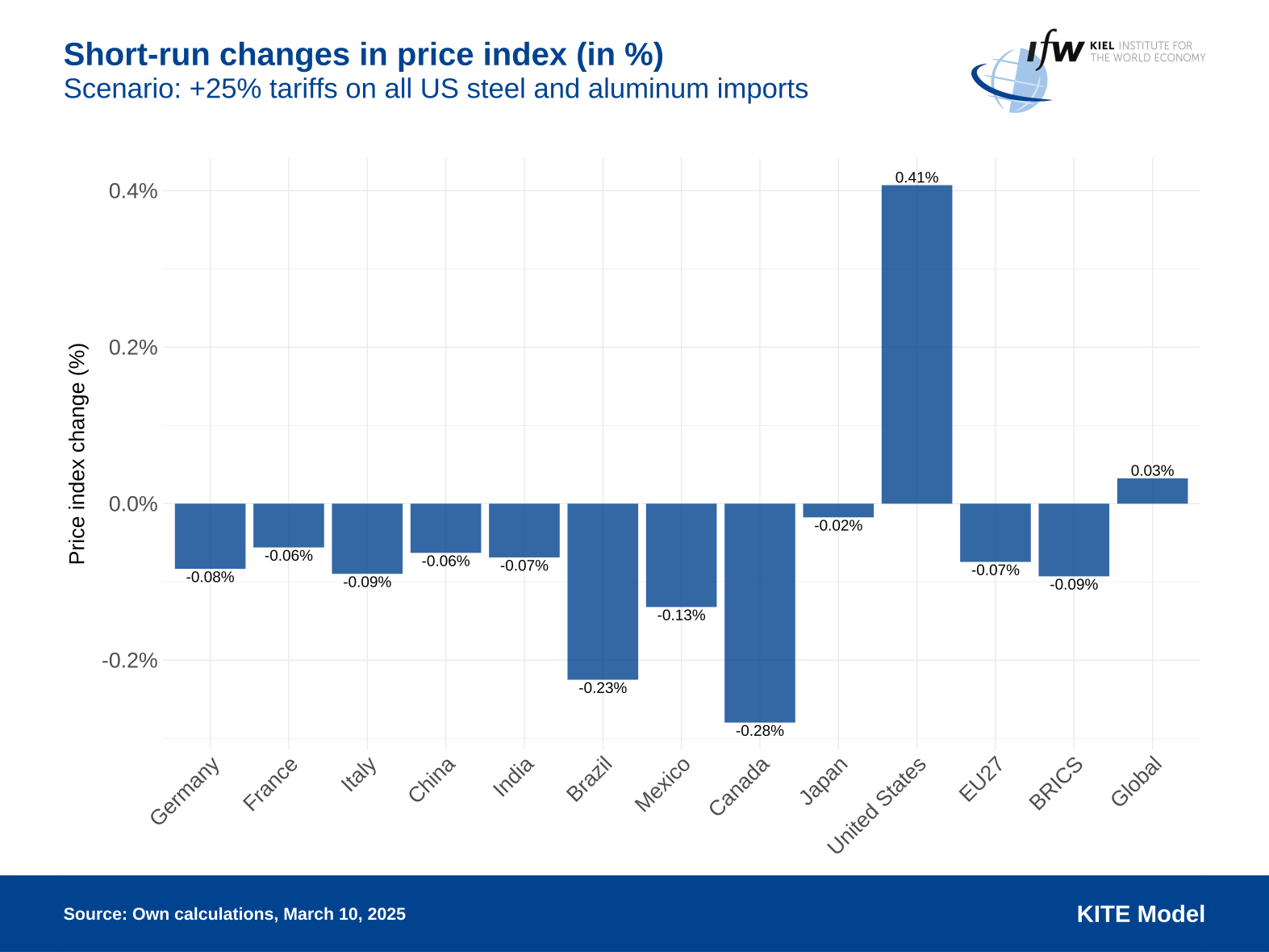
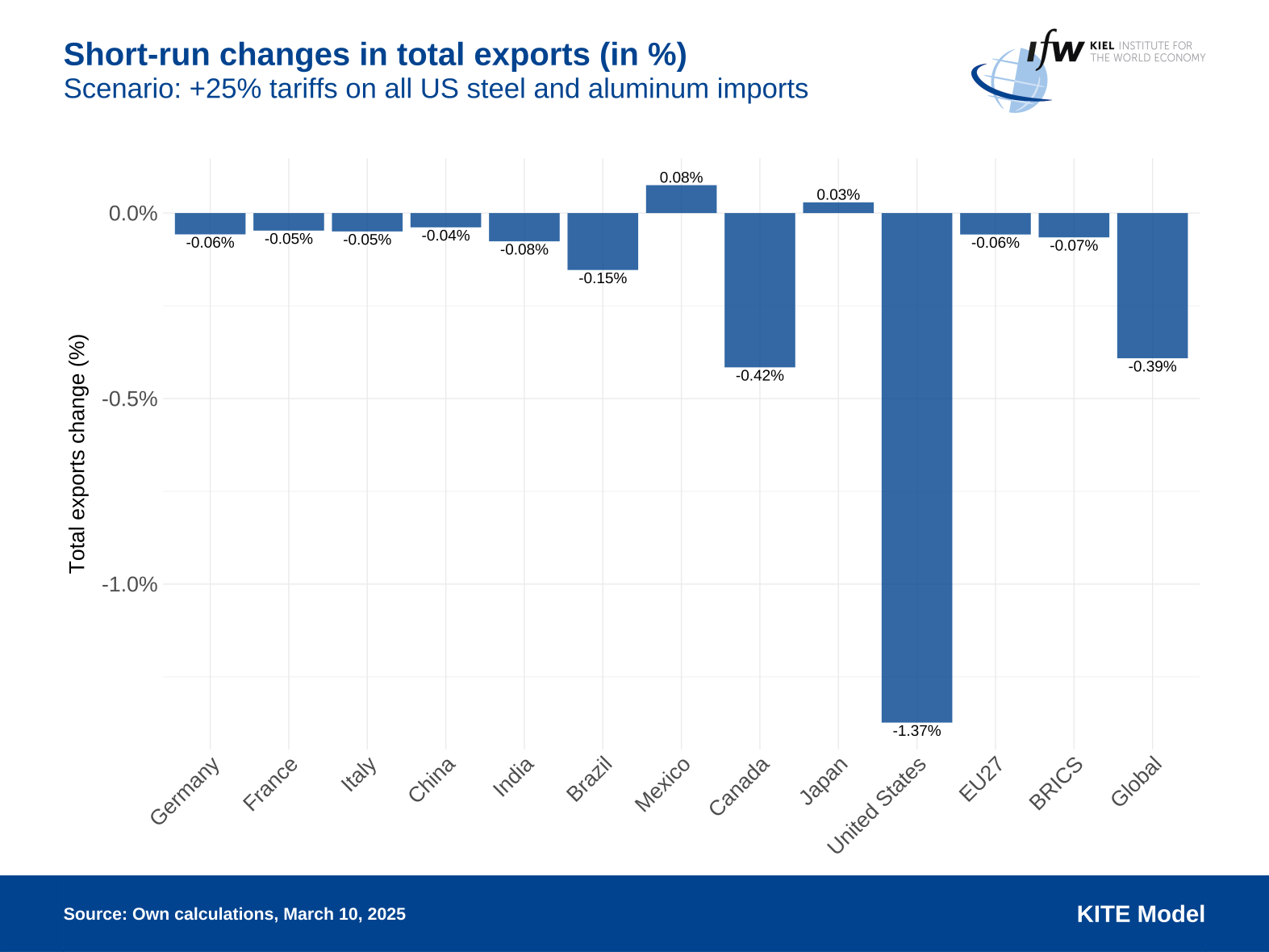
In contrast, the economic damage that the US inflicts upon itself is considerable. Prices in the US are expected to rise by around 0.41 percent, fueling inflation. US exports are projected to decrease by 1.37 percent. Imported steel and aluminum will become significantly more expensive, raising production costs across many American industries. These higher costs are likely to be passed on by US steel and aluminum producers to domestic customers, and reducing competitiveness internationally.
Canada and Mexico, which had recently been exempt from country-specific tariffs, are again severely affected. Simulations show a decline in real GDP of 0.39 percent for Canada and 0.19 percent for Mexico. A large share of Canadian and Mexican steel and aluminum exports goes directly to the US market, making these countries particularly vulnerable to the new tariffs.
“These tariffs may appear symbolically in line with Trump’s protectionist ‘America First’ policy, but ultimately they harm US economic interests,” says Julian Hinz, Research Director for Trade Policy at the Kiel Institute for the World Economy. “Even though the direct effects of Trump’s tariff policy on the EU are negligible, they signal the potential for further protectionist measures. The EU must remain vigilant and prepared for possible escalation,” Hinz emphasizes. “Therefore, diversifying trade relationships and strengthening economic resilience should be strategic priorities for Europe.”
To support ongoing analysis of global trade policies, the Kiel Institute has launched the Kiel Trade and Tariffs Monitor. The platform provides up-to-date information and structured data sets on recent tariff changes, facilitating informed discussion and research on trade policy issues.