

KITE Insta Analysis: US tariffs could significantly impact Europe’s automotive sector
An ad hoc simulation-based assessment by Julian Hinz, head of the Trade Policy Research Group, highlights the potential economic consequences of an announced 25% United States tariff on European Union automobile imports. Drawing on simulations conducted with the KITE model and based on currently available policy information, the analysis points to substantial sectoral disruptions across Europe’s automotive industry.
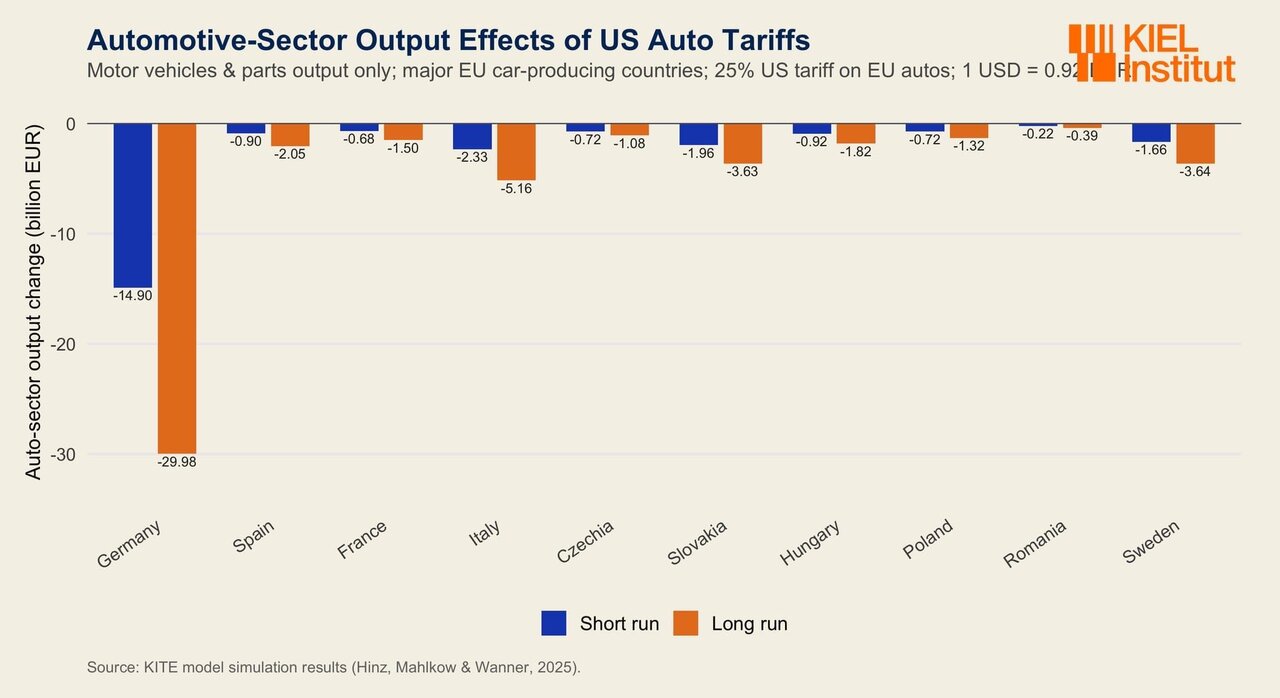
According to the findings, Germany’s automotive sector would be particularly affected. In the short run, output losses are estimated at nearly €15 billion, rising to approximately €30 billion over the longer term. Other European economies with strong automotive sectors—including Italy, Slovakia, and Sweden—would also experience notable declines.
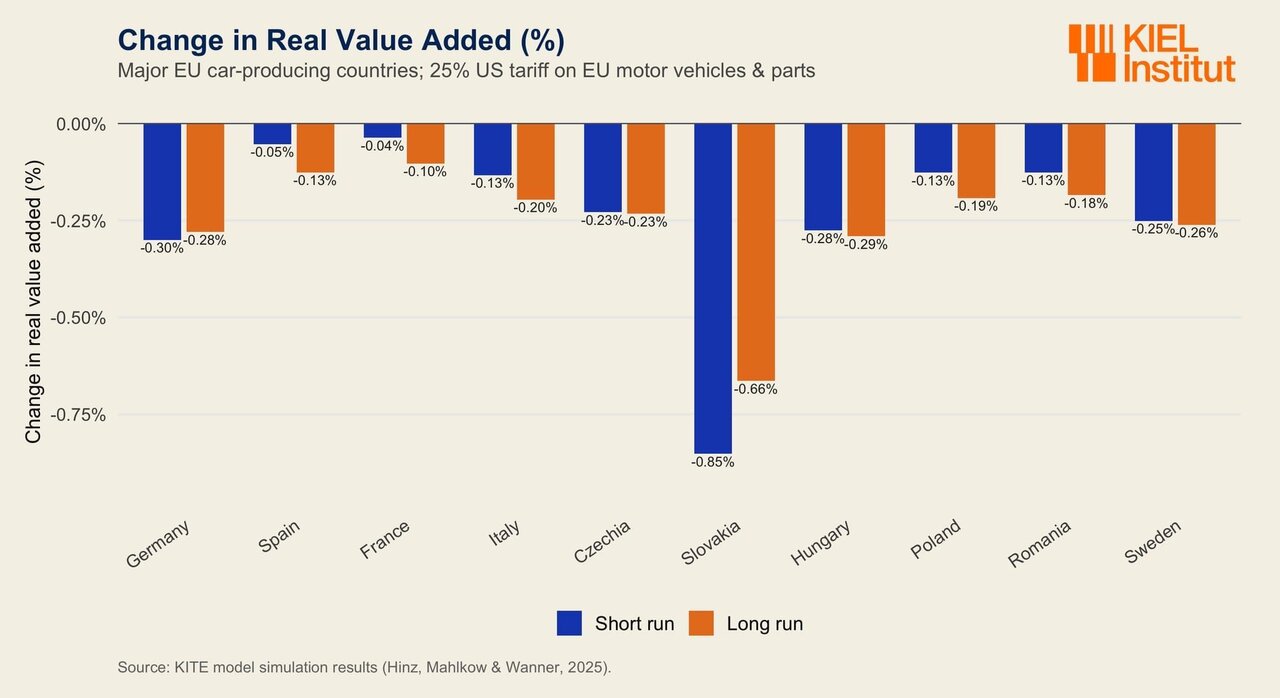
While the broader macroeconomic effects are less pronounced than the sector-specific impacts, they remain economically substantial. Slovakia is projected to see the largest reduction in real value added in the short term (around -0.85%), followed by Germany, Hungary, and Sweden. Germany’s already slow pace of growth would be hard-hit. These results underscore the vulnerability of highly integrated European automotive supply chains to trade disruptions.
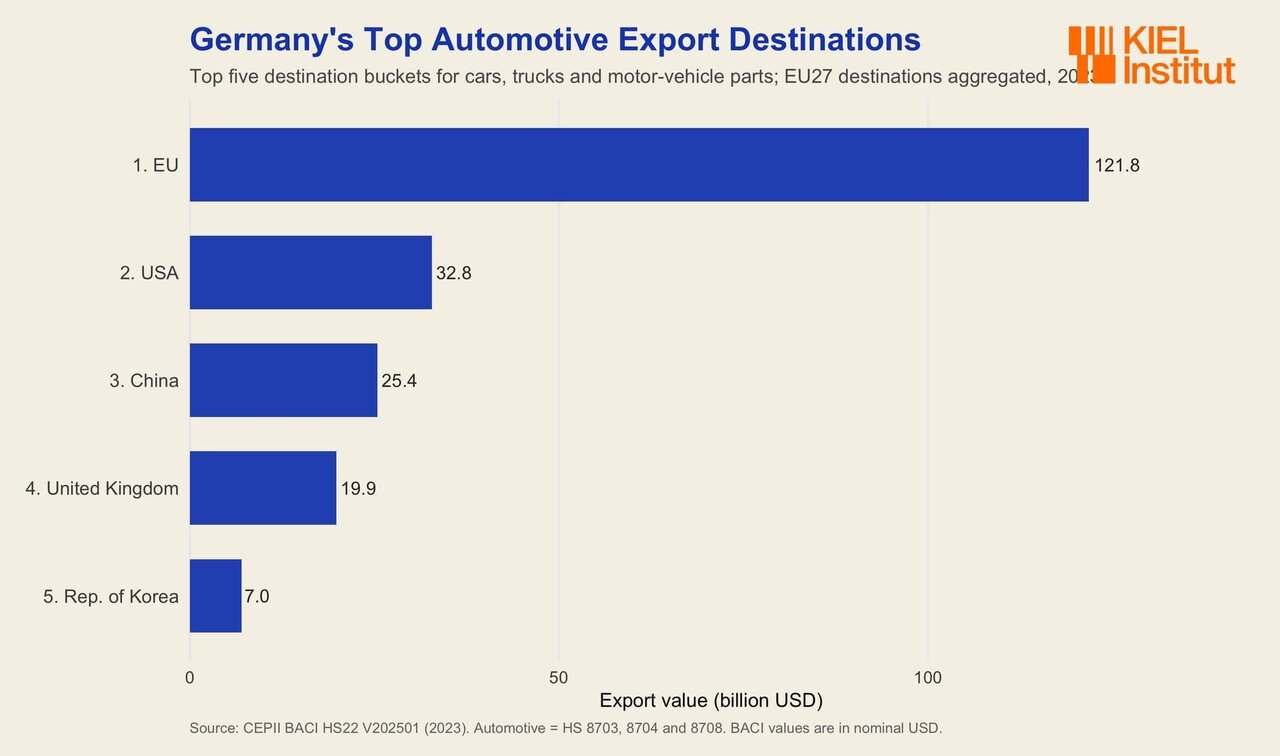
The analysis also highlights the structural importance of export markets. For Germany, EU countries remain the primary destination for automotive exports. However, outside the EU, the United States is the single most important market—surpassing China and the United Kingdom. This export pattern helps explain why US tariffs would have a direct and significant impact on German industry.
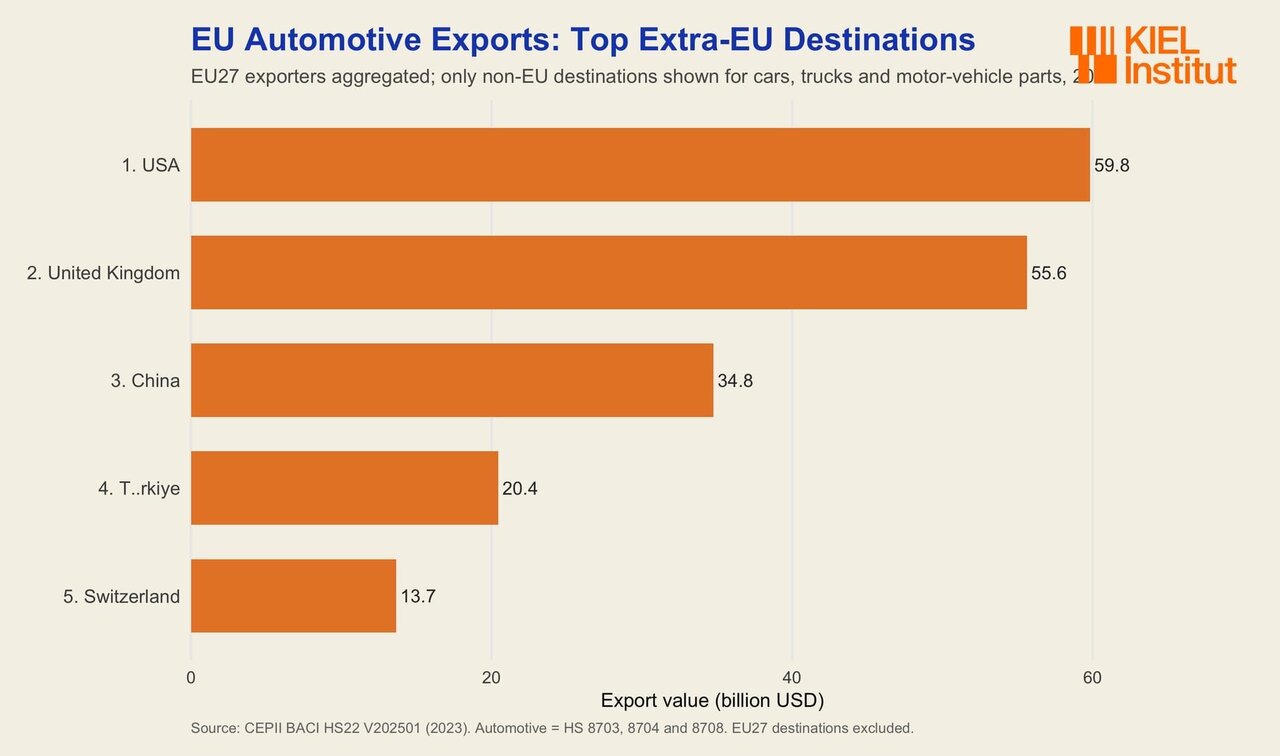
At the EU level, the United States and the United Kingdom are the largest external markets for automotive exports, followed by China, Türkiye, and Switzerland. As a result, even a targeted tariff affecting only one sector could have far-reaching implications for one of the EU’s most critical export industries.
The findings provide an early, model-based indication of the potential economic risks associated with escalating transatlantic trade tensions, particularly for Europe’s automotive core.
Find out more about the KITE-Model: